Upto 15% off today! hurry now!
"What Makes a Sneaker Premium? 5 Real Signs of Luxury Quality | VougeBoxStore"
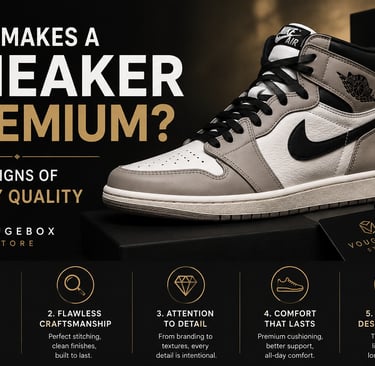
# What Makes a Sneaker Premium? 5 Real Signs of Luxury Quality Anyone can slap the word "premium" on a shoebox. Actually delivering it is a different story. At VougeBoxStore, we hear the question all the time: *what actually separates a premium sneaker from a regular one?* It's not the price tag, and it's definitely not the marketing copy. It's what's happening in the materials, the construction, and the details most people never think to check - until the shoe they bought falls apart in six months. Here are the five real signs that tell you a sneaker is genuinely premium, not just marketed that way. ## 1. Full-Grain Leather, Not "Leather-Like" Materials Look at the label. If it says "synthetic upper," "PU leather," or just doesn't say anything at all - that's your first red flag. Premium sneakers use **full-grain or top-grain leather**, suede, or high-density technical mesh that's been engineered for durability, not just appearance. Full-grain leather ages the way good leather should: it softens, develops character, and gets *better* looking over time. Synthetic alternatives crack, peel, and stiffen. Run your thumb across the material - genuine leather has natural texture and slight imperfections. A flawless, plastic-smooth surface is usually a sign of a coated synthetic doing its best leather impression. ## 2. Stitching You Can't See - On Purpose Flip the shoe over and look at the seams. Cheap construction glues panels together and hides the seams under a strip of trim. Premium construction uses **hidden or reinforced stitching** - Blake stitching, Goodyear welts, or double-stitched seams - that holds the shoe together mechanically, not just chemically. Glue fails. Stitching doesn't. If you can see loose threads, uneven spacing, or glue residue at the seams, the shoe wasn't built to last past a season. ## 3. Weight and Sole Response Pick the shoe up. Premium sneakers have a **deliberate weight** - not heavy for the sake of it, but dense in a way that signals quality rubber, real cushioning foam, and a sole unit that was engineered, not molded as cheaply as possible. Press your thumb into the midsole. It should offer resistance and spring back cleanly. Cheap EVA foam feels either rock-hard or collapses with no rebound at all. And check where the sole meets the upper - premium builds use a clean, even bond line with no visible glue overflow. ## 4. Hardware That Doesn't Corrode in a Month Eyelets, zippers, buckles, branded hardware - these tiny details separate luxury sneakers from mass-market ones faster than almost anything else. Premium brands use **solid metal or treated hardware** that resists tarnishing, rusting, and discoloration. Cheap hardware is usually thin, plated metal that flakes or rusts the first time it gets wet. If a brand cut corners on a $0.30 eyelet, ask yourself what else they cut corners on. ## 5. The Story Behind the Craftsmanship This is the sign most people overlook - but it's often the most telling one. Premium sneaker brands can tell you **where the materials come from, how the shoe is constructed, and why specific choices were made**. Mass-market brands can't, because the answer is usually "whatever was cheapest that quarter." Craftsmanship isn't just a feeling - it's traceable. At VougeBoxStore, every pair is built around sourcing decisions and construction techniques we can actually explain, not just claim. ## The Bottom Line Premium isn't a price point. It's a set of decisions - about materials, construction, and care - that most brands skip because they're invisible until the shoe fails. Once you know what to look for, you'll never look at a "premium" label the same way again. **Explore the VougeBoxStore collection** and see the difference for yourself - every pair is held to these five standards, no exceptions.
Vougeboxstore
7/1/20261 min read

My post content